
What Servicemembers and Their Families Need to Know Before Hiring Divorce Lawyers
Divorce is never easy, but for military families, the process can be significantly more complicated. Between deployment schedules, relocation requirements, federal protections, and a uniquely structured system of pay and benefits, military divorces introduce layers of complexity that civilian spouses never have to consider. These issues can make the emotional and financial strain of separation even harder to navigate, especially when both parties want to preserve their stability and protect their children during a difficult transition.
Military couples often find themselves weighing not only the standard questions of support, custody, and asset division, but also how service obligations and federal laws will affect the pace and outcome of their case. Because of these intertwined factors, military families frequently need more guidance to ensure the process is handled correctly and their long-term rights remain protected.
Unique Challenges in Military Divorce
Despite the emotional turmoil surrounding divorce, military spouses must still resolve the full range of issues that any separating couple faces. Questions of child custody, child support, paternity, spousal support, and the equitable division of assets and debts all need to be addressed. These issues become more intricate when military compensation, housing allowances, and deployment-related absences are involved, creating a situation where the standard civilian framework is not enough to produce a fair and sustainable outcome.
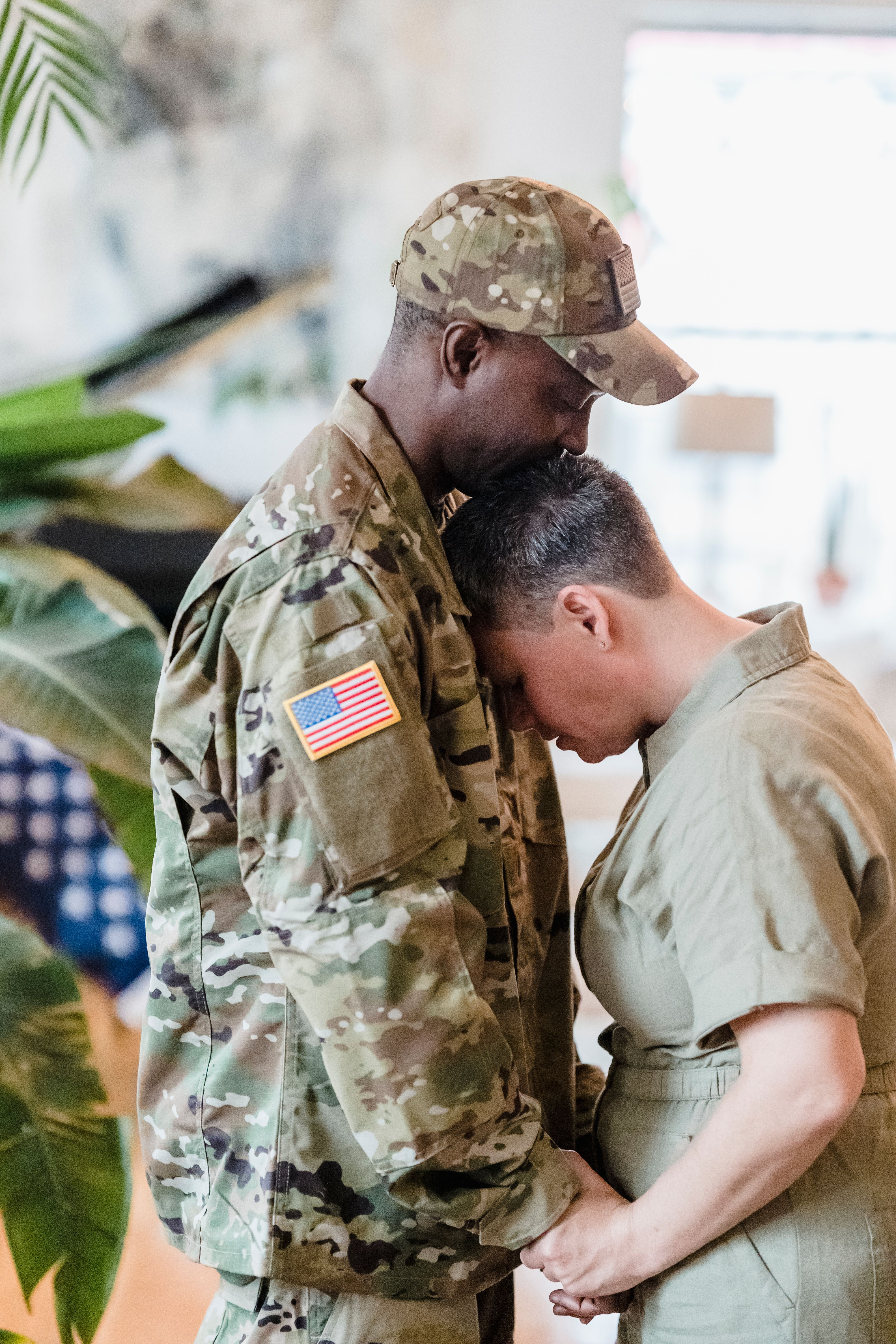
Child custody and visitation arrangements often require additional planning because deployments, base transfers, or mandatory training can disrupt even the most detailed parenting schedules. Determining a fair child support amount becomes more complicated when military pay includes various allowances, special compensation, or bonuses. Spousal support may also need to factor in a servicemember’s evolving career path and the impact of frequent relocations on the non-serving spouse’s employment opportunities.
Determining the Right Jurisdiction
For military families, one of the earliest questions is where the divorce should actually be filed. While most civilian divorces are filed where the spouses reside, military servicemembers are frequently stationed away from their legal residence or deployed abroad. This creates uncertainty about whether the stationed location, the servicemember’s home state, or the spouse’s residence is the appropriate jurisdiction.
Courts typically look at whether a posting is temporary or whether the servicemember has established residency in the state where they are stationed. A deployment alone is not usually enough to establish residency. However, a servicemember may still be drawn into the jurisdiction if they participate in the case or otherwise acknowledge the court’s authority. These determinations involve subtle distinctions that must be evaluated carefully to avoid delays or jurisdictional conflicts.
Federal Protections Affecting Military Divorce
The Servicemembers Civil Relief Act adds another layer of complexity to the process. While it does not stop a divorce from proceeding, it provides important protections to ensure active-duty servicemembers are not disadvantaged simply because they are deployed or otherwise unable to appear in court. The SCRA gives servicemembers the right to request a delay or to participate remotely, preventing the divorce from moving forward without their opportunity to meaningfully engage with the process.
This safeguard protects both the servicemember and the integrity of the proceedings, but it also requires the legal strategy to account for potential timing and scheduling adjustments.
Dividing Military Pensions and Benefits
One of the most significant differences between civilian and military divorce is how retirement pay and benefits are divided. Under the Uniformed Services Former Spouses Protection Act, military retired pay is considered marital property and can be divided during divorce just like a civilian pension. Local courts determine how the distribution will occur and what percentage each spouse may receive.

The USFSPA also includes the 10/10 rule, which permits the Defense Finance and Accounting Service to send payments directly to a former spouse if the couple was married for at least ten years with ten years of overlapping service. Additional considerations such as Survivor Benefit Plan coverage and the qualifications for 20/20/20 or 20/20/15 benefit categories create further layers of analysis, especially when long-term healthcare or access privileges are at stake. Because these benefits operate differently than civilian programs, calculations must be handled with precision to ensure a fair division.
Selecting An Appropriate Attorney
Given the numerous legal and logistical challenges involved in military divorce, choosing an attorney with real experience in this area is essential. Kaspar & Lugay, LLP, a military divorce attorney in San Diego, provides service members’ families with the focused representation needed to address these issues effectively, whether the service member is stationed in California or deployed abroad.
Their team understands the intricacies of the Servicemembers Civil Relief Act, the rules governing custody and visitation during deployment, and the financial complexities that arise when military compensation is involved. They know how to navigate jurisdiction questions, communicate efficiently with clients overseas or on base, and prepare strong strategies for pension and benefit division under the USFSPA.
Kaspar & Lugay also brings a deep understanding of family dynamics within military households, ensuring that custody arrangements reflect not only legal requirements but also the realities of service-related obligations. Their combination of legal experience, financial acumen, and technological accessibility provides military families with support at every stage of the process.
Moving Forward With Strength and Stability
Military divorce is undeniably challenging, but with the right guidance, you can move through the process with clarity and confidence. The issues unique to servicemembers and their spouses require attention to detail and thoughtful planning, but they are manageable with knowledgeable support. Protecting your future, your rights, and your children’s stability begins with understanding how military obligations and benefits intersect with family law.
If you or your spouse serve in the armed forces and are considering divorce, Kaspar & Lugay, LLP can help you navigate the process from start to finish. Contact their firm today to schedule a consultation and take the next steps toward securing a stable and informed path forward.
Kaspar & Lugay, LLP
+18585043252
12526 High Bluff Dr UNIT 300, San Diego, CA 92130


